Got down to putting my thoughts down after a long time. A long write up though 
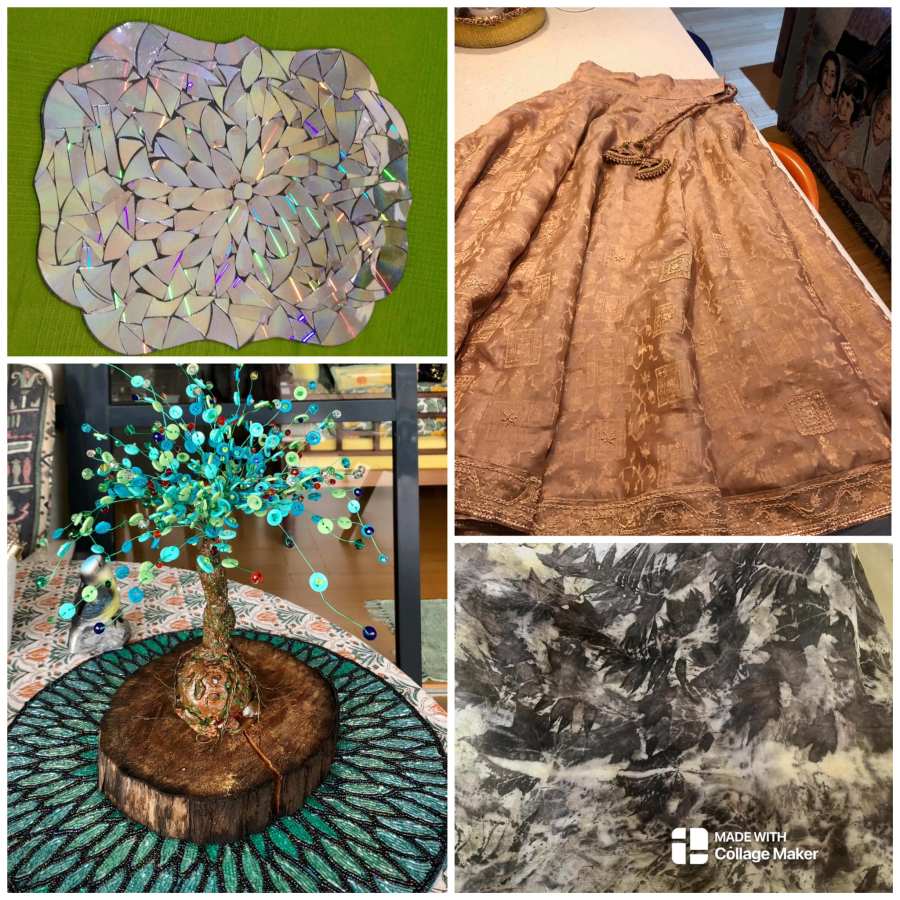
The current generation has seen a remarkable era of rapid technological advancements and societal transformations. This is an unparalleled pace of change that has made us consider novel ways of thinking and concepts that were unimaginable just a few decades ago. All this requires a profound shift in mindset and approach. I have been working to adapt to this change and trying my best to go with the flow. One of the concepts that I have always believed in and practiced is repurposing. My favorite “Something out of nothing” projects (sharing some pictures below). But I realized I didn’t do much of it with clothing. My daughter pushed me to think about it and now I am 100% on board.
“Fast Fashion” culture today with a quick turnover of cheaply made garments is resulting in a staggering amount of clothing waste. A bit of research tells me that 100 billion garments are produced each year for a total population of 8 billion people in the world. 92 million tonnes of garments end up in landfills. To put in perspective, this means that the equivalent of a rubbish truck full of clothes ends up on landfill sites every second every day.
When we throw away clothing in the garbage, not only does it waste money and resources, during the decomposition process, textiles generate greenhouse methane gas and leach toxic chemicals and dyes into the groundwater and our soil. An average person uses only 44% of their wardrobe. But if we continue to demand and buy new garments, more garments will continue to be produced and we will continue to contribute more to landfills, it can take 200+ years for the materials to decompose in a landfill.
Instead, we can all make some simple sustainable changes in our wardrobe by repairing, repurposing, and recycling clothing.
Instead of discarding damaged clothing, repairing them can significantly extend their lifespan. Simple repairs like fixing seams, replacing buttons, or patching small holes can prevent garments from becoming waste prematurely.
Another effective way to reduce clothing waste is through repurposing. By giving old garments a new look and a new life, we can extend their usefulness and delay their journey to landfills. Repurposing can involve upcycling, where old clothing is creatively transformed into new and unique pieces, this will also give work/employment to small time tailors instead of high-end designers. I have been doing this on and off over the past few years just as a hobby by converting my sarees into ethnic Indian wear for our daughter.
A game changing incidence that inspired me the most was when a couple of years back our daughter got married and decided to have my wedding attire redesigned for her wedding. She simply didn’t want to buy a new dress even for her wedding. I was disappointed at first as I had nurtured some visions about how my only daughter will dress up for her wedding. But I am happy the way things turned out. My exquisite wedding saree was repurposed to get a new look and she not only looked gorgeous, it was such an honor for me to see my daughter wearing one of my dear possessions for the most special day of her life.
Going forward, I know that it will be very hard for me to buy any new garments anymore even with some celebratory family events coming up soon. I am now looking forward to seeing what we can creatively repurpose and upcycle instead.
So, no more buying new sarees for sure until I do something with the odd 50 or more that I still have 
 . A couple of flights and I was at this place where I didn’t have to lift a finger, was looked after every minute of the day, fed meals that seemed gourmet to me, as for a change I did not have to cook them for myself, got time to reflect, lied on a bed all day and night, did some senseless yet stress busting art and craft things, met briefly with some friends and family, but for most of the time was with just myself.

 , our home for now. This phrase “we are back home” sometimes perplexes me as I use it for so many places that I consider home. Our own homes in Kenya
  , our kids’ homes often in two different places, some friends’ and family homes that are no less than home to us. I must say that we are fortunate to call so many places home, what more can one ask for in life
  ?We had some of the best times of our lives during this stay of almost four months in Canada
 . Traveling back to Kenya
 survived without any attention given to them in about 4 months. I can contentedly say that the journey back was equally good.





 INGREDIENTS
 STEPS
STEPS Four Steps or Less