There goes my precious betel vine!

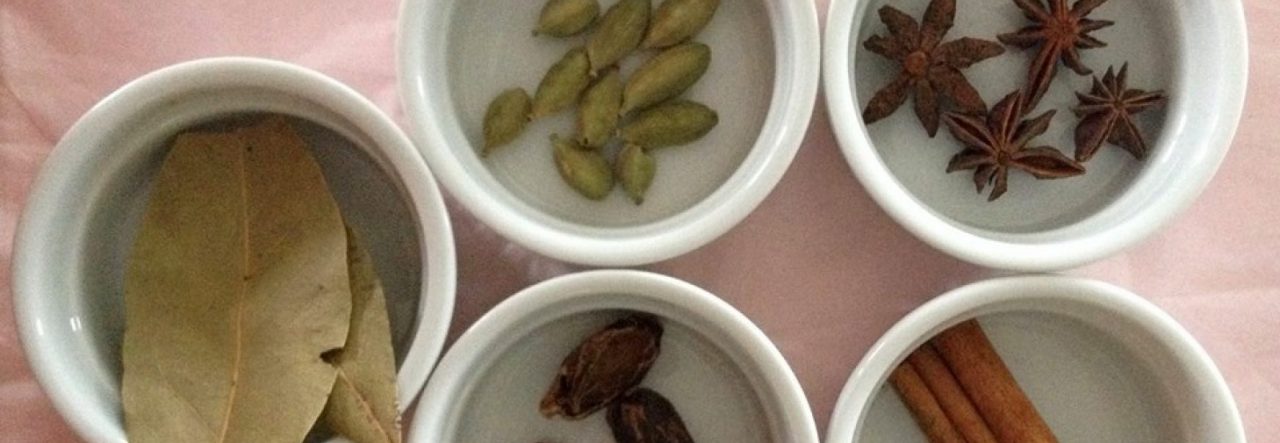
paanLet me start by telling you what a betel plant is.The betel plant is an evergreen perennial, with glossy heart-shaped leaves. A sheaf of betel leaves is traditionally offered as a mark of respect at auspicious beginnings, and to greet elders for their blessings at wedding ceremonies. Fresh crushed betel leaves can be used as an antiseptic for cuts and wounds. It is also good for the respiratory system and is used in treatments of bronchitis, cough, and cold. Betel chewing increases digestive capacity when used with lime. It also neutralizes acidity and acts as a blood purifier. Along with all the medicinal benefits this leaf has to offer, it is most commonly served as a digestive and mouth freshener after meals. In this form it is commonly known as PaanPaan is made by wrapping cardamon, rose petal jam, fennel seeds, areca nut and other condiments into a betel leaf.

So considering all of these great features of betel leaves combined with my love for growing herbs at home, I felt quite lucky when I came across a very good variety of betel vine to grow while we were living in Ghana. The weather was perfect and the vine flourished into a glossy bed of shiny green hearts. There were so many leaves on the vine that I had a standing offer extended to all my friends to take as many leaves as they wanted for their house parties.

Now before I tell the interesting part of the story, I have to lay the backdrop. We were living in a house that had a guard at all times, their duty changing every 8 hours. Most of these guards were staffed by a security company and did not understand much of English. However they were very nice, smiling all the time and nodding their heads to every conversation and question as if they have understood everything.

So, one of my friends called to ask if she could get some betel leaves for a party at her house, I gladly said yes. As I was not going to be home when her driver was to come to pick up the leaves, I showed the vine to the guard on duty.  I told him that a driver will come to get these leaves and let him take as many as he wants. Though it was a simple instruction, still I repeated it twice and the guard nodded his head and confirmed with saying “Yes, I understand”.

When I got back after a couple of hours, I just got into the house without thinking much about whether the betel leaves were picked up or not. Later in the evening when I was taking a stroll inside the compound of the house, I felt that the kitchen garden area was looking really neat and groomed. Soon I realized what had happened. I got the shock of my life. There was NO betel vine any more. The entire area had been cleared. I could not trace even the uprooted vine or roots anywhere. And that guard I had spoken with earlier had gone off duty. I was so upset and simply assumed that it was possible that my friend’s driver might have taken the entire vine instead of only a few leaves. I hesitatingly called my friend to check and to my disbelief I got to know that she could not send the driver for some reason and had changed her mind about using betel leaves for the party. Now, I was having a hard time understanding what actually happened to my beloved vine. it was a difficult night to pass by waiting for the guard to turn up next morning.

When he came I asked him what happened to the vine, he was still smiling and saying “Yes, yes, I understand” and actually had a sparkle in his eyes as if waiting for me to say “job well done”. I was feeling really troubled but could not express it as he was all smiles and I could now see that he actually did not understand English at all and just knew the few words: “Yes, yes, I understand”. Later I had to get his supervisor (who came on daily rounds) to explain to him what I wanted him to do and what he did. The supervisor told me that when I showed him the vine, he presumed he had to uproot it and was proud of the great job he had done!

And so, that is the sad tale of the betel vine that became victim to language barriers! I still miss the distinct flavour of that particularly rare variety, but on the bright side I now have a great story to tell at parties!


Facts to know with freezing and thawing cooked food

  1. Always discard any items in the freezer that have come into contact with raw meat juices.
  2. Do not leave cooked food at room temperature for too long before freezing. Remember, we freeze food because bacteria develops when its left at room temperature.
  3. Thawing completely and then refreezing food not only loses taste, texture, and nutrients but could also result in the development of bacteria due to frequent temperature changes.
  4. Never taste food to determine whether it is safe to eat. You also should not rely too heavily on appearance to determine whether the food is safe. If in doubt, throw it out.

Also check- How do I manage excess cooked food? Freeze or not? and How best to thaw frozen food?

Why do I still not use a pressure cooker?

It might be because you have heard a horror story about old-fashioned pressure cookers. Trust me pressure cookers today are very different from those outdated aluminum models, and are perfectly safe to use as long as instructions are followed.

I am on a mission to make people around me to think differently about this kitchen equipment that can save both time and money. I know all of us understand the need and importance of green cooking, smart energy saving and cutting our carbon footprint on this beloved planet.

Consider the fact that pressure cooking saves 70% or more energy than conventional methods of cooking. YOU can make a positive difference to the environment and also save considerable cooking time by switching to this method. So, take this small step to help save earth. Watch how easy it is to use one.

I have seen people scared to death with the idea of using a pressure cooker. Often it is the fear of high pressures and accidentally blowing a hole through the kitchen ceiling. For others it may be the sound, which can seem similar to a jet taking off. Or then it might be the geysers of steam shooting out of this contraption that make people uncomfortable .

Despite these seemingly frightening aspects of the pressure cooker, it is an easy to use and effective piece of equipment, and with the right instruction you can definitely get over your “exploding disaster” fears!

Facts about Pressure Cookers:

  1. Modern pressure cookers are all about the safety features, which include a top that locks on securely, a pressure indicator, and a safety pressure release valve.
  2. In terms of steam heat, it is hot, but quickly cools.  It is not as dangerous as cooking something with grease.
  3. Ways of releasing the pressure
    1. Quick release
    2. Running water
    3. Natural release

To get over the fear.

  1. Choose the right model for you. Stove or electric, loud whistle or no whistle.
  2. Read a reliable pressure cooker cookbook that will help you get over some of your safety fears.
  3. Take notes on cooking times, so that you’ll know what to adjust next time.
  4. Take time to get a feel for how it works. Every stove is a little bit different, and every pot is a little bit different, too. There’s a bit of a learning curve. You will soon discover how wonderful it is for cooking things.

What not to do:

  1. Do not add too much liquid -Don’t cook foods that “foam” and don’t fill it more than half way.  Then, don’t worry about it.(the pressure cooker has a very low evaporation rate-about one tablespoon per 10 minutes of cooking vs one cup of evaporation in an uncovered pot). This can be easily fixed by decreasing the cooking liquid significantly. You can even go as low as your cooker’s minimum requirement (which is usually a cup) – check your manual to make sure.
  2. Do not over-cook. The pressure cooker infuses flavours up to a point, after that point the food is over-cooked and the meat becomes tough and tasteless because all of the juices have been squeezed into the cooking liquid – making a delicious stock (if there wasn’t too much water ; )
  3. Do not ignore the manual or do anything they say NOT to do.

Practice by just boiling water until you get the hang of it.  In general, once it starts releasing pressure on its own, just turn it down and “cruise” from there.

Safety features pressure cookers already have

  1. If the top is put wrong – it won’t reach pressure. If you do get it on and do not turn down the heat right away, the valve will release the extra pressure and will activate. If this value is accidentally blocked, a secondary valve (usually a little silicone or rubber stopper) will kick-in. Should THAT fail, the gasket (silicone or rubber circle that seals) will buckle and THAT will release pressure – I have never gotten to that stage but at that point it can get messy and may spray food on your cook top but not the ceiling.
  2. A self-locking handle keeps you from accidentally opening the pressure cooker while the contents are still under pressure.

I hope you consider pressure cooking – not just for the speed but for the flavour, the health benefits and the planet (it’s ridiculous how little energy it needs to operate). I’ll gladly help you navigate the process of getting acquainted with your pressure cooker – just make the decision to buy one!

Meals that can be made in minutes take the pressure off of home cooks who want to make good food but may be pressed for time.


How to use a Pressure Cooker?

After the required number of whistles, the stove should be turned off. Once the heat is off, all the steam releases naturally in 5-10 minutes. This is the best way of cooking as it retains all flavours and nutrients. However, steam can also be quick released by using the steam release valve or by gently lifting the whistle (depends on the model of cooker and instructions that came with it). Check out my video to see how steam can be released early before its usual time.

In general, perform these safety checks and you will be good to go:
1. Check to make sure there are no dents or cracks in your pressure cooker or the rubber gasket before using it.
2. There must always be some sort of liquid in your pressure cooker before you close the lid.
3. The pressure cooker should never be more than ⅔ full as there needs to be room for the steam to accumulate.
4. Never try to force open the lid of the pressure cooker when there is steam inside. You can get seriously burnt.
5. Even when it is safe to open the lid, lift the lid away from your face, as the contents will be steaming hot.
6. All pressure cookers have a quick release valve/system. Follow the instructions to make sure you are doing it correctly.

Which Pressure Cooker to buy?

A few quick buying tips:

  1. Go with a spring valve for quieter more efficient operation or finger-tip pressure release that prevents clogging of the steam vent.
  2. You can also go for one with two pressure levels (High and Low) to keep you from pulverizing fish and veggies while you’re infusing them with great flavour
  3. I prefer the black hard anodized stovetop model over the electric one. Particularly because it makes the pressure cooker absorb heat faster making it more energy-efficient. And the pressure cooker stays looking new for years.
  4. Start with a 5-6L (that is the most versatile size) but if you can afford it get a set that uses the same pressure cooking top with a smaller 3-4L pan (for making side dishes, rice for one, pasta sauces, etc).

Are high-end pressure cookers worth the money?

Yes, and no. You get what you pay for and if you pay a lot you get a lot of hard anodized metal, stainless steel, bells & whistles and accessories. This extra metal retains heat like you wouldn’t believe and needs less energy to operate and makes things stick a little less.

No, in the sense that all that extra metal takes a few minutes less to reach pressure. And, as for extra accessories for extra money like a steaming pan,  you might already have it in your kitchen. The end the result is the same: pressure cooked food. Do not let budget get in the way of getting your first pressure cooker!

Missing Battery!

This is an anecdote that amuses us every time we recollect our memories and talk about it with family or friends.

On a bright morning in Accra, as Manoj was about to leave for work the office car, a Toyota RAV4, would not start. There was no ignition sound other than a dead click. Manoj thought that the battery may be dead. He opened the engine hood and to his shock found that there was no battery in the car, even the cables connecting the battery to the circuits were gone. In a private house where the car was parked inside the compound that is guarded 24 hours, this sounded outrageous. The guard on duty was summoned and enquires started. We had been ignoring earlier instances of minor things missing from the compound but now Manoj decided to report it to the police as well as the security company. So, within an hour of this, a police complaint was made and supervisors from the security company got busy starting the enquiry. Both the police and the investigating officer from the security company took photos of the crime scene. Meanwhile Manoj requested the office admin to get a new battery and send another car with a jumper cable to drive him to work. Coincidentally the other car that was sent was also a RAV4 of the exact same model year. Manoj enthusiastically called for the guards to show them the battery in this car and how it was connected to the cables. As he opened the engine hood to look at…voila..there was no battery in this car too…and this was the car that had just driven in through the gate. You can imagine his dismay, what would it have been like.. the first reaction was – how is this possible?? In no time we found out  that the battery was hidden behind a panel as a part of engine design. It was hilarious and dumbfounding at the same time..how could we have missed seeing the battery. After realizing our mistake all we did was laughed and laughed and this became one of the most interesting stories of our time in Ghana. A full round of apologies were made to the guards, security company officials, police and the office staff for creating the confusion.

Colourful Beet Dip-दही गुलाबो चटनी

Calorie wise nutritious home made spread 
Gluten Free, quick to make 
Packed with Minerals, Vitamins and Antioxidants
Ingredients:
500 grams greek yogurt
One small beet root
1 teaspoon salt
1spring onion chopped small
2 inch frozen crushed green chilli (optional)
2 cloves of crushed garlic fresh or frozen
Preparation:
If you do not use greek yogurt, you will need to extract water from regular yogurt.For this put yogurt in a muslin cloth and hang it for 1-2 hours for the water to drain out.
STEPS:
Step 1. Chop beetroot very small by hand or in a chopper and cook in microwave for 1 minute to make it tender.
Step 2. Add salt, beetroot, spring onion, frozen chopped garlic, and frozen crushed green chilli  to greek yogurt or block of yogurt.
Step 3. Mix everything thoroughly and let it rest for 15-20 minutes before serving.

Handy Tips:IMG_2163

1. Beetroot yogurt dip can be served with baked naan bread, corn wafers,  crackers or thin savoury biscuits.
2. You can be as creative as you want to be , add other herbs like dill weed, rosemary, basil, mint, coriander or spices like red chilli pepper, black pepper.
2. You can also add finely chopped bell peppers, mushrooms or cucumber, going even further you could add bacon pieces.

SPICY COCONUT DIP-नारियल की चटनी

Gluten Free, quick and nutritious

It is a complete food rich in calories, vitamins, and minerals.

Cooking Time: 5 minutes

INGREDIENTS:
For Dip:
200 grams frozen shredded coconut
50 grams of dry roasted chickpea or peanuts
2 fresh green chilli or 1 inch of frozen crushed green chilli
100 ml milk
1 teaspoon salt
½ teaspoon sugar
2 inch of frozen grated ginger

For Garnish:
1 teaspoon of oil
1 tablespoon of black mustard seeds
10 fresh or frozen curry leaves
2 whole dried red chilli

STEPS:
STEP 1. Put all ingredients for coconut dip in a food processor/grinder until it forms a smooth paste, keep adding milk if needed and let it grind for a minute or two for shredded coconut to get smooth.
STEP 2. For garnish, heat oil in a small ladle, add mustard seeds, red chilli and curry leaves until lightly roasted.
STEP 3. Add this to the dip, mix well, let it sit for 15-20 minutes for flavour of garnish to permeate.

IMG_1612HANDY TIPS:

  1. You can use fresh or frozen shredded coconut, the taste of the dip will be the same.
  2. roasted chickpeas can be replaced with peanuts or almonds, they will give the same smoothness and a different flavour to the dip.

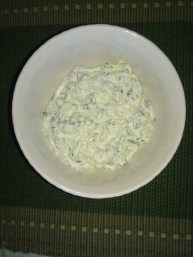
Cucumber Dill Yogurt Dip-खीरा दही की सदाबहार चटनी

Gluten Free
Loaded with goodness of yogurt and coolness of cucumber
Quick to make  
Ingredients:
500 grams greek yogurt
One medium cucumber grated
1 teaspoon salt
1 tablespoon dry dill weed or fresh chopped dill leaves
2 inch frozen crushed green chilli (optional)
25 grams of cut coriander leaves
2 cloves of crushed garlic fresh or frozen
Preparation:
If you do not use greek yogurt, you will need to extract water from regular yogurt.For this put yogurt in a muslin cloth and hang it for 1-2 hours for the water to drain out.
STEPS:
Step 1. Grate cucumber and add 1/2 teaspoon salt to it, leave it for 5  minutes and then squeeze water out of it.
Step 2. Add salt, grated cucumber, dill, coriander leaves, garlic (fresh or frozen), and frozen crushed green chilli  to greek yogurt or block of yogurt.
Step 3. Mix everything thoroughly. Let it rest for some time or serve immediately.

Handy Tips:IMG_1598

1. This dip goes well as a spread for sandwiches, gyros, shawarma, as a dip with grilled veggies, meats, baked naan bread, corn wafers,  crackers or thin savoury biscuits.
2. You can be as creative as you want to be, add spring onion or other herbs like chives, rosemary, basil, mint, or spices like red chilli pepper, black pepper.

BROCCOLI ALMOND YOGURT DIP-हरी गोभी,बादाम और दही की चटनी

Calorie wise Nutritious home made spread 
Gluten Free, quick to make  
Ingredients:
500 grams greek yogurt
One 50 grams floret of broccoli cut into small pieces
1 teaspoon salt
30 grams of crushed almonds
1 tablespoon dry dill weed or 25 grams cut fresh dill or 10 crushed mint leaves
2 inch frozen crushed green chilli (optional)
2 cloves of crushed garlic fresh or frozen
Preparation:
If you do not use greek yogurt, you will need to extract water from regular yogurt.For this put yogurt in a muslin cloth and hang it for 1-2 hours for the water to drain out.
STEPS:
Step 1. Boil Broccoli in water for 3-4 minutes or cook in microwave for 1-2 minutes to make it tender.
Step 2. Add salt, broccoli, crushed almonds, garlic, and frozen crushed green chilli  to greek yogurt or block of yogurt.
Step 3. Mix everything thoroughly in a blender and add olive oil (optional)

Handy Tips:IMG_1623


1. This dip goes well with grilled veggies, meats, baked naan bread, corn wafers,  crackers or thin savoury biscuits.
2. You can be as creative as you want to be, add spring onion or other herbs like chives, rosemary, basil, mint, or spices like red chilli pepper, black pepper.